

Reading Goals
-
Cross off a book that’s been on my to be read list for years
My Reading Progress
Books Read
10
Goal: 10
Pages Read
3,205
Reverberations
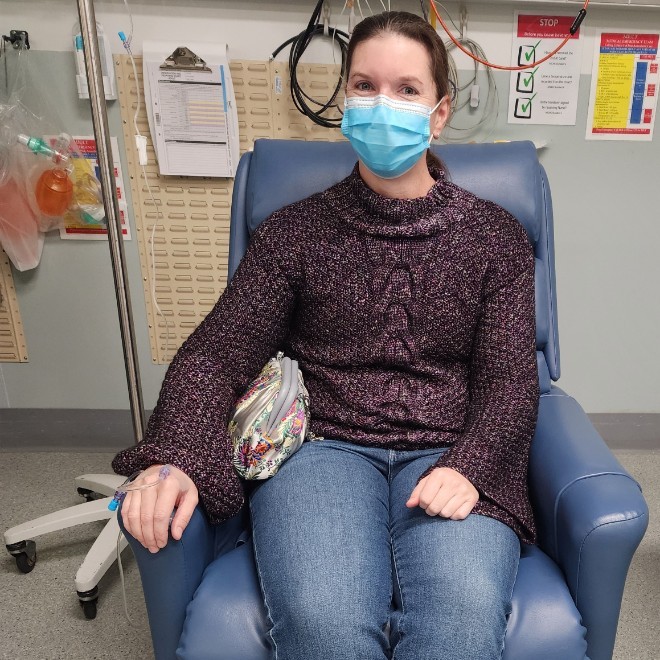
I expected the last blog post to be the final one. But then I ended up in hospital.
It started as discomfort in the morning, but not enough to phone in sick. By the end of second period, I was in significant pain. For the first time in nearly twenty years, I left work early to go home, sick.
After a couple of hours of trying to medicate, sleep through, manage the pain, I phone the on-call nurse through Health Direct to help me decide what to do, whether I’m over-reacting. After the first initial details, I’m asked if I have any medical conditions.
Relapsing-remitting multiple sclerosis.
And thus begins the process that will be repeated with the nurses at the local multipurpose health centre, the paramedics, the doctors at the base hospital. A listing of symptoms from my past relapse (surprisingly difficult), a detailing of my medication and treatment, an explanation that it’s been twelve years since my last relapse. Time and again, I explain that this is not that. While MS symptoms can vary, my last MRI showed no new lesions, my recent neurologist appointment indicated nothing of concern. I am pretty sure this is not that.
To their credit, every medical professional I speak to takes me at my word. Neither my expertise about my body, nor the pain I’m experiencing, are dismissed or trivialised. But for the first time I realise that with every future medical issue or emergency, MS has the potential to distract or disguise what might be happening.
For both my partner and I, the experience in the hospital evoked echoes of that time more than a decade ago. The stricken expression on his face, not knowing what was happening as I vomit from the pain. His apprehension as they struggle to cannulate me so that they can administer pain relief, remembering the last time when, not capable of understanding what was happening and just wanting to go home, I kept ripping the needles out of my veins. My own anxiety, trusting that I am cognisant and capable of answering the questions myself, not looking to him to speak on my behalf, as I did when I was unable to communicate. At the same time, I recognise that to some extent my capacity has changed, and that all important things must be written down. While I’m better than I was, my memory is still affected, and stress makes it infinitely worse.
The diagnosis, when it comes, is somewhat anticlimactic: a kidney stone.
This was not that.
This time.
Sunflowers
Counting Spoons
Who am I?
How can I help?
“Don’t let the bastard beat you!”
These were the words of my critical care nurse when I was hospitalised during my relapse. As someone living with Multiple Sclerosis herself, she understood more than most what we (because it wasn’t just me) were going through. And for me, she became a symbol that life would still be possible. I cannot imagine many jobs as physically, mentally and emotionally demanding as nursing – and she managed both that and MS. I don’t remember much of that time, but that experience gave me a profound appreciation for nurses.
When I received my diagnosis, I was advised to avoid online forums: too much doom and gloom (which is probably unsurprising, and equally unhelpful, given one of the symptoms of MS is a ‘sense of impending danger’). Often, when people learned of my situation, they’d tell me about a friend-of-a-friend who also had MS, but at that stage, I didn’t know anyone else personally. I didn’t have a community.
But.
Every four weeks, I’d go to hospital and sit with other patients who had relapsing-remitting MS. Some of those people had travelled two hours to turn up, early on a Saturday morning. For an hour and a half, we’d sit in day surgery with cannulas in our elbows or hands, receiving our medication through infusion from a nurse who had the training to deliver it. In the beginning, I was too sick to even understand the conversations around me, but I do remember one man in a wheelchair constantly cracking jokes. Later, as I became more confident and familiar with the people around me, I’d ask questions. I learned about different diagnosis journeys, different symptoms, different lives. There were people who worked at universities, in retail, in construction. People who were retired, people who had young children, people barely out of their teens. Men and women…but mostly women (and a weirdly disproportionate number of teachers). Later still, I became the one sharing my own experiences and (for whatever it’s worth) my advice. Over the decade, the people in this group changed: some changed medication, some moved away, some died. Some of those people have become my friends.
Now, my medication is given via two injections. I still travel once a month to the hospital to receive it from the same nurse who was giving the infusions twelve years ago, but I’m in and out within fifteen minutes. It’s convenient, but if I’m lucky enough to run into another person, it’s usually only as we pass by in the hospital corridor; a quick 60 second recap on our past month, and we move on.
That was my MS community and while I miss aspects of it, it happened at a time that was necessary and right for me. Beyond that, I have a broader community, evident here: the people that have taken the time to read this, those who are participating or donating or raising awareness for the MS Readathon. Thank you.
I don't look sick.
That’s the nature of an invisible illness. You might not notice that the toes of my left shoes are scuffed from foot drop, or that my irritability each month comes from fatigue as my medication is due, or that my difficulties with cognitive processes are from the lesions on the language, memory and emotional centres of my brain. It’s been twelve years now, since my last relapse.
I’m one of the lucky ones. When I visited my local GP, confused about some spreading numbness across my back, thighs and hands, it was one of the first things she thought to assess. Others in my situation haven’t been so lucky. For some, a diagnosis might take years, dismissed as a stomach ‘flu or vertigo or ‘imagination’. The longer a diagnosis takes, the more likely irreversible damage is done to the brain.
I’d heard of MS (even if I didn’t understand it at the time) through participation in the read-a-thon as a kid myself. My GP knew that Multiple Sclerosis was something to consider, especially for someone like me. (Approximately 33 000 people in Australia live with MS: nearly three quarters are women, with an average age of symptom onset of 30 years.) When I inform people of my diagnosis, most reference the Readathon as a point of understanding.
Awareness means faster referrals by GPs. Awareness means greater understanding that disability is not always in a wheelchair. Awareness means increased funding for management, quality of life and - maybe one day - a cure.
Awareness means talking about Multiple Sclerosis; the Readathon is a way to start that conversation.
My Impact
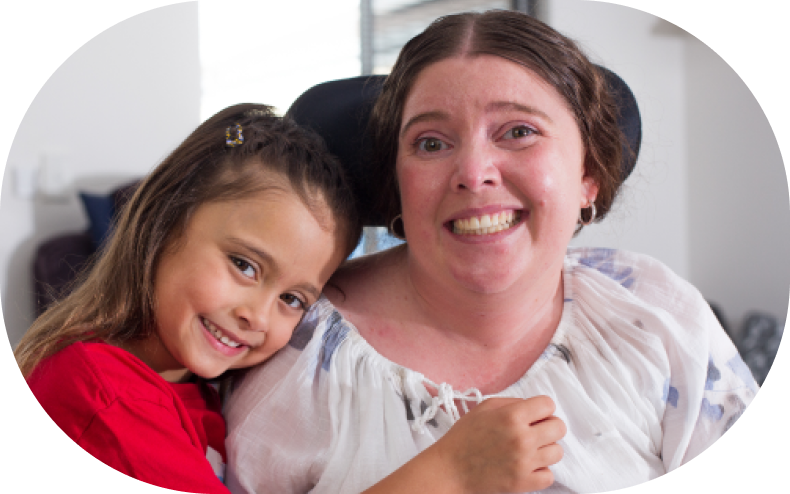
So far I’ve raised $1,325 to help 46 families impacted by MS

Thank you to my recent sponsors
Laura, Dayna And Co
$106.75
Leah Heanes
$58.12
You are amazing!
Cheryl Benn
$150
Hi Tanya Better late than never! Words can’t express how much I respect and empathise with you. You’re an amazing human! 🥰
Jenna
$23.81
Anonymous
$58.12
You got this!!!
Kiyomi Calwell
$23.33
Sharon H
$33.24
Love the spoon analogy!
Em
$58.12
Tara Suidgeest
$34.40
Melinda Mendonca
$74.19
Rachael Squire
$48.43
Kathryn O'sullivan
$24
Game on!
Graeme Fischer
$24
Melanie
$33.24
Rebecca L.
$32.79
Katrina Stewart
$32.79
Kirsty Phillips
$23.50
Thelma Watkins
$50
Mitch Fischer
$56.96
Why was the librarian kicked off the plane? Because it was over booked.
Peter Stevens
$50
Christina
$32.79
Amber
$52
Well done :)
Liz
$32.79
Sandra Taylor
$56.96
Graeme Fischer
$100


Go you good thing! Very proud of you xxx